If you’re new to the world of engine tuning, it probably stands to reason that you want to know how it all works. The various ins and outs of engine performance tuning can seem a little complex at first, however, the benefits of using engine programmers are fairly easy to spot!

In this guide, we’ll be taking a look at all the benefits of engine tuners and performance tuner systems. Even if you are completely new to tuning up vehicle engines, it’s worth looking into the wider reaching benefits before you go ahead and buy!

How Do Engine Tuners Actually Work?

Ok – so let’s take a look at the science and tech behind engine programmers first. Essentially, engine tuners are miniature devices which you can use to sync with the firmware of your vehicle. However, if this sounds a bit vague, it actually does a bit more than that.

You’re effectively looking at a handheld computer that can help you to tweak and adjust certain areas of performance in your vehicle. While you can do plenty of things to improve performance by switching out physical elements and features, you can do a lot to improve the power of your car, for example, by using an engine tuner to communicate with your on-board CPU.

Normally, you’ll find that you can connect engine programmers directly through your engine via your dashboard. You don’t have to go for a dash mount, but it’s often one of the most convenient places to keep your tuner in case you want to change things up at short notice.

Engine performance tuners cover a lot of different ground. For example, they can help to improve your horsepower, to keep your coolant temperature in check, and to balance out the performance in your engine. While it’s easy enough to assume that your car is going to come operating at peak performance when you first buy it, this isn’t always going to be the case. Therefore, if you are finding yourself struggling for horsepower and really want to get your money’s worth, then there are more than a few things you can do to ‘crack’ into the system.

Types of Tuners

It’s also worth keeping in mind that there are a few different pieces of tech you can use in performance tuning, no matter the vehicle or make you drive. These are, in brief:

  • Chips, which connect to your CPU or PCM. These are some of the most common tuner types and are those we described above. This link directly to your engine.
  • Modules, which instead of connecting to your engine, focus on different sensors you may have under your bonnet. These will read information from a sensor and send a different result to your PCM.
  • Programmers, meanwhile, plug directly into your diagnostics and let you tune up via control module. These systems are very popular with drivers who are looking to change up pressure and temperature, for example.

All three types of tuners work through engine modification. This means that they will focus on a range of different factors in your engine and PCM communication. This may include the size and frequency of pulses, as well as timing.

Unlock the Full Potential of your Vehicle

As mentioned, you will naturally want to buy a vehicle that’s the best you can get for your cash. However, when you start driving, you may find that there are some aspects which you need to fine tune. This may include horsepower, air pressure, or even coolant temperature.

Overall, engine tuning allows you to improve the performance of your car up to its optimal potential. Why settle for anything less than the best for your money?

You Can Improve Your Fuel Economy

It’s entirely possible to use performance tuners to help your fuel go that little bit further. For example, you may find that some tuning systems or chips have coach services on-board. These will tell you what you need to tweak and adjust, and when, to make sure that your engine is using enough fuel, and to make sure you are not wasting anything.

The possibilities for improving your economy when it comes to miles to the gallon will, of course, vary from case to case. However, it’s great to know that you may not have to do too much to really get the most out of your performance.

It’s Easy to Manage

One of the most popular reasons for people taking up engine tuners is for the simple fact that it is much easier to manage than people imagine.

In many cases, as stated, you’ll be able to completely tweak and tune your engine from a control panel, which means you can always see what’s going on. Some of the best performance tuning systems even make suggestions to you, meaning that if you are completely new to the world of tuning up your engine, you can follow a template or guide, so you know how to make the most of it. If you really know what you’re doing, of course, you don’t have to follow this!

Easier to Install Than You Think!

What might put some people off tuning altogether is the misconception that car tuning and performance engineering is likely to be difficult. This is rarely the case. Custom tuning, for example, is based around your specific vehicle and is likely to be easier and more flexible to manage.

However, tuning systems come in all shapes and sizes, and from a variety of brands. No two might ever be the same! Take your time to look through some of the top brands available online and see what’s picking up the best reviews.

We all want the best out of our cars, and sometimes, that means giving them a bit of an extra push. And why not? Take your time and find the right fit.

Conclusion

Hopefully our guide has helped you understand a lot more about the process of how engine tuners work and function. If you found this article interesting, we’re sure you’ll enjoy our article about engine performance tuning and how that works. Feel free to contact us any day of the week


For purchases made from November 1st through December 31st, 2020, all Bully Dog & SCT tuners are eligible for the manufacturer’s holiday rebate. Purchase your Bully Dog or SCT performance programmer from TotalZParts.com by December 31st, 2020 and submit your proof of purchase by January 10th, 2021 to receive your VISA gift card. See below for different rebate amounts on on the full line of Bully Dog & SCT products. See below for links to the rebate submission forms.

Bully Dog Rebate Form
SCT Rebate Form

GTX (40460B, 40460S): $50
BDX (40470, 40490): $45
X4 (7015, 7416, 7215) = $40
GTX Watchdog (40465B): $40
GT Gas (40417): $40
GT Diesel (40420): $40
LiveWire TS+ (5015P, 5416P) = $40
iTSX (4015, 4416) = $40

SCT and Bully Dog programmers allow you to back up the factory tune on your vehicle’s PCM, and write a new performance program that enhances your engine’s power output and efficiency. For gas vehicles, the pre-loaded tunes are based on fuel octane level (87, 91, and 93 octane), with the highest octane allowing for the biggest horsepower and torque gains. For diesel vehicles, most devices have “street”, “performance”, “tow” and “extreme” tunes pre-loaded, which optimize your diesel’s power output depending on your preferred driving parameters. Finally, these devices will allow you to individually adjust various options. These adjustable options include speedometer calibration (for tire size changes), axle ratio, rev limiter, speed limiter, transmission shift points, transmission shift firmness, AFM/DoD (Active Fuel Management, otherwise known as Displacement on Demand), spark timing, idle speed, and more. Please note that the available adjustable options vary depending on the year, model and engine of your car or truck, so be sure to ask us which options are available if you’re purchasing to make a specific adjustment.


We all want the best out of our cars. You don’t simply go ahead and buy a new vehicle expecting it to run at half-capacity. Over time, however, it makes sense that you’d want to improve engine power. This is especially the case if you need help optimising your engine for towing, or so that you can essentially take more on with what little engine you already have.

Short of buying a whole new vehicle outright, to get the most out of your car, it makes sense to enhance its power output and overall efficiency. Ultimately, to make sure your engine is working at optimum performance, you’re going to need to think about what enhancements you’ll want to make, and which tuning device is right for the job.

Engine Tuning – The Basics

Generally, there are two or three main ways through which you can tune or enhance the performance of your car’s engine. The two main sources of tuning for most car owners will be through modifying your engine directly, or through engaging in chip tuning.

To improve engine power through chip tuning, you’ll need to look at your ECU. This is your vehicle’s main control center and optimising its capabilities could help you to eke more power out of your engine. Besides enhancing power, performance programming devices can also enhance fuel efficiency and increase your MPG.

Direct engine modification can be seen as riskier, and more invasive. In fact, in many cases, anyone looking to start optimising engine for towing may find that adding a turbo charger doesn’t actually do much. That’s because plenty of modern vehicles already have the necessary boosters in place!

What Else Can You Do?

When considering any kind of engine optimisation, you also need to make sure you are working with the right data. For example, do you need to calibrate your speedometer? What some motorists might not realise is that you might need a tuner to recalibrate your speedometer for increasing tire size. The fact is, when you change something as major as the size of your tires, you are going to need to reset or change your speedometer for accurate data analysis.

Therefore, you may as well be sitting on an engine that’s already working at max efficiency. Before you go ahead and invest in any kind of tuning package or service, it makes sense to check that you won’t need to modify the speedometer after a tire switch.

Always make sure you discuss your engine enhancement or tuning needs with an expert. It’s worth remembering, too, that you might not necessarily need that extra push – go for a full MOT or vehicle audit and see what you find.


Baja DesignsLP4, LP6, and LP9 high powered off-road LED lights have become a must buy for many off-road enthusiasts. Baja Designs’ first iteration of this unique design began with the larger 8-inch LP9, inspired by their iconic La Paz HID. The LP9 Pro uses 9 forward projecting LEDS to produce an extremely bright 11,025 Lumens at 105 watts, and 6 LEDs using Integrated Peripheral Technology (IPT) which produce 1,140 lumens at 10.5 watts per side. Baja Designs use of IPT technology in the entire line of LP series lights allows each light to produce a massive 200° spread of usable light.

3 Different Sizes to Choose From

Since the LP9 quickly became a popular light for masterfully tackling dark driving conditions on a wide range of vehicles, Baja Designs released the smaller LP6 and LP4 versions, with a more compact diameter of 6.5” and 5” respectively. As with the LP9 series, the LP6 and LP4 lights also can be purchased with either clear or amber color lenses. The LP6 features 8,600 forward projecting lumens and 1,700 lumens of peripheral lighting from their patented IPT technology. The LP4, the smallest of the three, produces 7,050 forward lumens and 1,700 peripheral lumens. All three of the LP Pro series lights also feature an independently controlled amber backlight which function as day-time running lights. The 640172 wiring harness, which supports 2 lights, has a separate wire lead with a splice connector to operate the amber daytime running lights. This harness, which we sell as a package along with 2 lights, also has a 3-position, 30amp DC rated, DPDT, On-Off-On switch to operate the high and low beam independently.

A great benefit of the 3 different sizes of the LP series is that you have the option of many different lighting setups on your vehicle. As an example, many customers have mounted 2 larger LP9 lights in the center of the front bumper, with 2 LP6 lights on each side. Not only does this add an aggressive look to your Jeep or truck, but it adds versatility by giving you the ability to independently engage the lights with the ideal power level and beam pattern that best fits your driving condition. If your goal is to have an ultra bright, narrow spot beam focused on projecting long distances, but you still want the option to engage peripheral lighting when needed, you can use LP9 spot lights in the center, and LP6 Driving/Combo beam lights on each side. Alternatively, if you want a more compact lighting setup, you can create a similar combination with the LP6 and LP4 lights. Whichever lights you choose for your setup, you’ll be blown away by their sleek, durable, a technologically advanced design.

2 Different Beam Patterns to Choose From

Don’t worry if you’re hung up on which beam pattern to choose, because the two primary lens options are simple enough for any off-roader to understand. The Driving/Combo lens is by far the most popular choice and makes sense for 80% of customers. The Driving/Combo beam pattern combines a wide driving pattern (42 degree spread) and spot pattern (6 degree spread), which provides drivers with a smooth blend of a focused long distance beam and side projecting peripheral beams. The reason most customers are best off with the Driving/Combo pattern is because the combination of distance and peripheral projection works in most driving conditions and covers all fields of vision. On the other hand, if you are buying LP4, LP6, or LP9 lights to be used in conjunction with lights that already cover your peripheral field of vision, you may opt to choose to spot beam pattern lens option (or “high speed spot”), which projects all of the light forward with a tight 6 degree pattern, focusing all of the light far down the road or trail.

A Wide Range of Mounting Options

When it comes to mounting the lights, the LP series LED lights are by no means limited to a specific vehicle or location on a vehicle. We have customers who have mounted LP4, LP6, and LP9 lights on motorcycles, trucks, ATV’s, UTV’s, SUV’s, boats and more. They function great as a single headlight, as secondary spotlights, or as low mounted fog lights. Each light includes black coated stainless steel brackets and stainless steel hardware. The brackets attach to the center of the light, and allow the lights to adjust upward and downward. Most customers bolt these brackets down onto a bumper or similar surface, but because of the symmetrical design of the light, you can also reverse the bracket to mount the bracket onto the bottom of a surface, if you want the lights to hang from the mounting surface, rather than be mounted on top of a surface. Whether you have a Ford F150, Ford Raptor, Toyota FJ Cruiser, Jeep Wrangler, Toyota 4Runner, Toyota Tacoma, Chevy Silverado, or any similar vehicle, you’ll be able to securely mount these to your front bumper, grill area, or roof without much trouble.

The durable poly-carbonate lenses and hard anodized aluminum housing make these lights durable enough to withstand virtually any scenario, which means you don’t have to worry about where you mount them, whether it be low down on a front bumper, or high up on your truck’s roof. You can also be confident they will withstand wet conditions and hard impacts, because these Baja Designs lights boast an IP69K rating (waterproof up to 9ft & pressure washable), and are IK10 Compliant for significant mechanical impact resistance.

Get the Best Price & Fastest Delivery

If this article didn’t answer all your questions about LP4, LP6, and LP9 lights, we’re happy to answer any question you may have and make sure you choose the right Baja Designs light for your setup. If you purchase Baja Designs lights from TotalZParts.com, you can be sure you’ll get the best price, genuine items, and a valid lifetime warranty through the manufacturer. Better yet, we accept offers on all Baja Designs lights, and can often match or beat competitors’ pricing. To submit an offer, just look for the “Make Offer” button on the product page. If we accept your offer, you’ll get a direct email with a link to pay for your order. If the price you offer us is too low, we’ll send you a counter offer and work to get you the best deal possible. Count on TotalZParts.com for the best deals and fastest shipping on Baja Designs LP4, LP6, and LP9 high powered LED lights.


In our latest post we explore what a suspension lift kit is. Read on to find out more…

A suspension lift kit is a specific type of modification done to an truck, SUV, or Jeep to enhance off-road capability and add extra inches of ground clearance. This upgrade helps boost the vehicle’s off-road performance by avoiding obstacles which may be found on the ground. Other advantages associated with a suspension lift kit include the ability to approach descents as a steeper angle, increase suspension travel, accommodate larger tires and wheels.

A lift kit is essentially a special kit that contains the necessary parts needed to lift a specific vehicle model, as well as detailed installation instructions. Some basic kits may only include a handful of simple components, while others include a large array of parts, like new shock absorbers, springs, drivetrain parts, drive shafts, etc…. The contents of your package depend on the model of your vehicle.

What Are The Advantages of Suspension Lift Kits?

Increased Clearance:

This is the primary and most noticeable advantage – a lifted vehicle can benefit from a bigger distance between the paved surface and its undercarriage. Combined with shock upgrades and suspension, this can help you stay safe when driving over damaged streets or rough roads.

Ability to Drive Through Rougher Terrain:

A higher vehicle is very beneficial to people that want to try to undertake the most difficult off-road experiences. These experiences include driving through rivers, or climbing up steep hills / sand dunes, etc. Greater off-road performance is usually ensured with a lifted vehicle… which helps with better clearance, a more robust ride, higher traction, and the ability to use bigger wheels.

Provides You with a Smoother Ride:

Our suspension lift kits provide the necessary space needed to balance out the load while offering superior comfort, even when you are driving through rough terrains loaded with cargo.

Better and Clearer Visibility:

In both congested urban zones and off-road areas, being able to view more of the road in all directions is extremely useful. This assists you in noticing potential dangers as soon as possible, giving you a far better view of vehicles, terrain, and large obstacles in the distance.

Provides Easier Access To Your Vehicles Underbody:

Whether you would like to examine or repair, better access to your undercarriage will always come in handy. Especially once you feel uncomfortable in confined spaces, an inspection of your vehicle underbody is not any longer a dreadful and difficult experience once you have a lift kit.

Bigger Tires:

Stock suspension forces you to use narrow tires, most of which will not give you enough traction if you need to come to a quick stop in the mud or snow. Using a suspension lift kit enables you to use beefier tires that are specifically designed for off-road driving, which can help carry your vehicle out of any difficult situation.

Assists With Towing:

Suspension lifts actually help the towing process, and allow you to manoeuvre the vehicle from one place to another with fewer difficulties. Your truck will be able to “squat” down without scraping the underbody on the road beneath.

Driving Safer (this is repeat of “better and clearer visibility” above):

A suspension lift kit gives you a higher security advantage compared to other lower-profile vehicles. A lifted vehicle provides a far better view of the road and the obstacles that appear. Even a few seconds of advance notice can make a noticeable difference between avoiding a dangerous situation, and becoming a part of it.

Choosing Between Different Options:

Lift kits cover a wide range of different lift heights, and shock absorber performance tiers, all of which are all suitable for various preferences. This variety can range from smaller lifts to big lifts, and basic shock absorbers to high performance and highly adjustable remote reservoir shock absorbers for those that want optimal versatility, durability, and off-road performance.

Obtaining A Dramatic Change:

Compared to body lifts, suspension lift kits are harder to install and more costly, but the benefits provided are definitely superior. This solution not only helps you gain height, but also provides more ground clearance and suspension travel, with the likelihood of fitting larger, more aggressive tires. On the other hand, the body lift kit works separately from your suspension components and lifts the truck body by installing spacers under the cab. Although it’s a cheaper solution, it might leave a clear and unsightly gap between the truck body and the frame.

Making A Good Impression:

If you want your truck to have superior off-road utility, larger wheels and tires, and an aggressive stance like something you’d like to achieve, then suspension lift kits are definitely worth a try!

As with any major vehicle modification that alters the configuration provided by the manufacturer, it’s crucial that you take care and watch out for the potential negative consequences. Also, keep in mind that some manufacturers won’t warranty a vehicle with a modified suspension.

Please remember that installing a suspension lift kit isn’t a DIY job for someone with little or no experience in the field.


While it’s safe to assume that a brand new engine is going to serve you well for a while to come, there may be occasions where you find you need to upgrade some components & do some engine fine tuning.

If it seems like a bit of a challenge, don’t worry – we all have to start somewhere. Thankfully, you don’t have to be the best mechanic on the planet to get the most out of your engine, and what’s more, you won’t necessarily have to see a mechanic to give things a little bit of a boost.

In this guide, we’re going to take a look at how you can effectively upgrade your engine, intake, and exhaust components for the best results. If you’re struggling to make the most out of your horsepower, or wish your car was a little more efficient on fuel consumption, it might be time to consider some performance upgrades.

For the purpose of this guide, we will be looking at a generic engine, meaning that some engines may differ in terms of the specifics we refer to in this guide. Make sure to consult your manufacturer, or a service centre, if you’re insure about what to do at any point.

Do keep in mind that this guide is for general reference only – as your own engine tuning needs may vary, as may the specifics!

First Things First

Upgrading an engine largely means investing in a few bits and pieces of aftermarket. This means that you’re likely going to need to set a budget aside to invest in a few crucial parts.

When you upgrade your stock engine components, you’re going to be focusing on boosting air flow, improving your ignition timing, and clearing out your exhaust in an efficient and practical manner.

Now that we’ve introduced you to the key concepts surrounding performance tuned upgrade components, let’s start taking a look at them in a bit more detail.

In some cases, particularly if you are new to engine upgrades, you will need to ask for the support of a mechanic. When it comes to ignition timing – in particular – you’re going to need to make sure the support of a trained hand is close by so that you can keep things as safe as possible.

Of course, if any of the following procedures sound a little complex, don’t worry. It’s fairly easy to swap out filters and the like once you know how, but we do all have to start somewhere. Therefore, take your time reading through the following advice and make sure to reach out to a service center if you feel you need extra guidance or backup.

What is Induction?

Induction is the process through which cleaner air is introduced into your engine. To be able to perform at its best, your engine is going to need induction so that you can improve the rate of airflow coming in and out of the vehicle.

It’s thought that upgrading the induction is a fairly simple process, at least compared to other tweaks you might want to make along the way.

Simply invest in an efficient air filter with tubing, which you can use to swap out with the induction system that your car arrived with. Air filters really do vary in terms of style, shape, and size, meaning you will need to shop carefully for the best fit.

For example, you can invest in quick, simple paper panel filters, which you can just swap in pretty quickly. These filters also come in foam and mesh types, too. However, many people will opt for cone filtration instead, as this will stand to bring more air into the engine than your standard panel filter.

Beyond this, there are cone filters, which are designed to help make things even more efficient. Crucially, the cone shaped performance filter will ensure that air availability in the engine will increase, which will offset rising temperatures. This is normally installed on a short ram basis, which many feel to be very convenient.

Of course, you can also install a cold air intake. Generally, you will need longer piping for these systems, which will provide the coldest air possible. The science behind this can be a little involved – but ultimately, many drivers avoid cold air intakes as they can alter the way their throttles respond. Through these systems, air will travel via intake through to the throttle itself, before travelling to the main manifold. The fewer bends there are in the passageways in between, the more efficient the system will be.

If this all sounds a little confusing – there’s no need to worry. This process simply ensures that the engine cools down quicker and that it has as much cold air as possible to operate efficiently.

What is Ignition Timing?

Moving on to the next stage, fine tuning your ignition timing is all about making sure the engine powers up at the right point once there is enough air intake. Timing is everything – and you’re going to need to make sure your ignition kicks in right before compression hits its peak.

As you’ll likely already know, ignition is everything – and you’re going to need to make sure your engine sparks up at just the right point so that you’re making the most of the potential power available. It might surprise you just how much ignition plays a part in engine efficiency.

Lighting the ignition too rapidly could lead to problems in the crankshaft, meaning that this stage of tuning may be best left to the professionals. However, getting ignition timing right is often a case of replacing or upgrading your spark plugs and HT leads.

Replacing and upgrading these components is a must if you find the existing parts to be worn. However, if you are buying new, there may not be much need for you to swap out on this side of things.

Earth leads, too, may help to provide you with a little more stability when it comes to the actual engine running. This is one aspect to tuning which you can effectively handle yourself without much issue, particularly as there are plenty of alternative earthing cables out there which will easily replace worn-out cabling that arises over time.

Exhaust Upgrades

Your exhaust, of course, is where the engine cycle ends. It’s here where your car kicks out everything that’s not used in the process so that it can achieve peak efficiency.

There are many different ways to enhance or upgrade your exhaust, meaning that this area can be a little confusing to those who are new to the process. For example, it may be worth you swapping out the muffler to achieve a more satisfying exhaust tone, and to  lessen airflow restriction.

Another great option for an exhaust upgrade is a cat-back system. Replacing this part, a crucial connector and piping necessity, may help to restore a little power to your engine.

You should also consider taking a look at the manifold, which is where the exhaust largely communicates with the different pipes and cylinders in the engine. To increase performance, you can upgrade to a manifold that consolidates the manifold outlet, further lessening restriction.

This might sound easy enough – it’s a case of swapping out your existing manifold and replacing it with a performance tuned unit. However, as always, it may still be worth asking professional mechanics to take a look for you if you’re unsure on what to do next.

There is also the catalytic converter, too, which works hard to lessen the amount of carbon dioxide released from your vehicle. A performance catalytic converter can be a cheap part depending on the manufacturer of car you opt for. Therefore, many drivers will look to upgrade their CCs as a priority. However, they can also be one of the most expensive parts in the tuning process, meaning that it’s worth having a firm budget to hand before you consider this.

That said, many drivers will find that this is one of the most reliable ways to release more horsepower to the car.

Car performance engine

How Else Can You Increase Engine Performance?

There are many different ways through which you can increase the efficiency and power of your engine. Of course, each engine is going to be slightly different, and there are even more ways through which you can improve the way your car engine performs.

Please only use this guide as an introduction, however – as you’ll need to approach more advanced tuning solutions and upgrades with a trained mechanic at a service centre. Crucially, it’s worth remembering that there is a world of different mods and tweaks you can bring to your engine, and a mechanic is likely to show your way around the best of them.

Are you worrying that your new car is struggling to get up to its full potential? Rather than buy a whole new model all over again – why not look at upgrading things with some well-chosen aftermarket parts? If you’re really unsure of what is likely to work for the best, be sure to reach out for advice.


Light-emitting diode (LED) bulbs have become increasingly popular across the globe for a variety of different applications. In fact, in 2020, LED lights are expected to make up about 61% of the global lighting market

But, LED bulbs can be used for much more than just household lighting. They have been rising in popularity for vehicles across the globe, too, and for good reason! 

Automotive LED lights use about 85% less energy than traditional halogen bulbs. They’re also brighter, more durable, and tend to be cheaper, even if you’re installing aftermarket LED headlights or using a LED light kit. Leading brands for LED lights including Baja Designs, Rigid Industries and Vision-X have built their product offerings on the quality of this lighting choice and it’s ever increasing popularity.

So, what different types of LED lights can you get for your car, and how can they benefit you? If you’re new to the world of LED but you’re interested in making your car look better and use less energy, keep reading for your official introduction to LEDs. 

Car LED Lights

LED Lights Can Cover Your Whole Vehicle

When you first think about LED lights for your car, you’re probably considering your headlights, and that’s a great place to start. LED headlights are about 90% more efficient than traditional bulbs. As a result, they generate less heat, so they last longer. LEDs can feel like a bit of an investment up front. But, when you consider how much energy you’re saving and how long they’ll last, they typically end up being cheaper than halogen bulbs.

Another great thing about LED headlights is that they tend to be smaller than their traditional counterparts. That allows you to get creative with your LED lights, so you can use different colors and design. If you’re putting your own car together or using aftermarket parts, utilizing your creative freedom with LED lights is a quick and easy way to let your personality come through.

Because LED lights tend to be smaller, you can use them just about anywhere on the car where lighting is involved, including:

  • Tail lights
  • Turn signals
  • Roof lights
  • Pickup beds
  • Fog Lights/Fog Pocket Area
  • A-Pillar/Ditch Lights

LEDs make a world of difference when used in off-road lights and light bars. They’re also great as fog lights because they tend to be brighter, so you can pierce through thick fog on a hazy morning – and your vehicle will look stylish while doing it.

A Rainbow of Colors

In addition to using LED lights all over your car, you can choose from a variety of colors that simply aren’t offered with traditional bulbs. Again, LED allows for a lot of creative freedom.


There are even color changing LEDs made for cars, trucks, and off-road vehicles. These are typically known as “RGB” (Red-Green-Blue) LEDs. These lights change color at varying speeds based on the amount of voltage that goes through them. You can use different colored lights in a variety of ways, and even have them set up to function differently. For example, your turn signal light might flash green, while your tail lights might be blue.


LED Accessory Lights

Want to get really creative and you’re ready to do a little DIY-ing on your vehicle? Check out LED underbody lights, strips, and tubes. Underbody lights are a great way to give your car an otherworldly look. Plus, because you can choose from different colors, installing LEDs beneath your car can really show off your personality and sense of style, especially when you’re driving at night. You’ll get an almost ethereal glow that will definitely draw attention to your vehicle, no matter where you take it.

Should You Choose LEDs For Your Car?

We’ve already talked about some of the benefits of LEDs, but if you’ve been looking into them for a while, it’s important to know exactly what you can expect. So, think about your needs and wants. LEDs allow for a lot of creativity, so if customizing & improving your vehicle is important to you, they are definitely an ideal solution.

In addition to being more energy efficient, they also power up to full brightness almost immediately. HIDs and halogen bulbs don’t do that. They take a short period of time to “heat up” and get bright. So, LEDs are actually safer, and more usable. Drivers behind you will have enough time to react to your tail lights because they will turn on immediately. Even those few seconds can make a big difference.

Finally, we should note that LEDs – even aftermarket kits – aren’t obnoxious or annoying, and they have often been stereotyped as such due to drivers who use them improperly. In reality, LEDs actually aren’t as blinding as other lights, including HIDs. However, make sure you’re aware of the road legal status of the lighting equipment you purchase; if you plan to run them on the road, make sure you purchase an “SAE” or “diffused” pattern light that is road legal. As long as you buy the correct lights and use them in the correct situations, you don’t have to worry about offending anyone else on the road, or your lights being so bright that other drivers can’t see. That’s an unfortunate myth that needs to be put to rest.

If you had to consider any potential drawbacks to car LED lights, the biggest one would likely be the cost. But, again, if you plan on having your LEDs installed for a long time, they will pay for themselves with how long they last. Many new cars actually come with LED lights, so you don’t have to worry about replacing them yourself.

But, if you do want to change out the lights in your existing vehicle, be sure to look over your local laws before you do. Some areas have regulations on aftermarket lights, and only let you use specific sizes and colors. But, if your location allows total freedom with LED lights, the sky is truly the limit when it comes to what you can do.

As you can see, you can use LED lighting just about anywhere on the exterior or interior of your car – including underneath it. Don’t be afraid to get creative with your installations, using different colors and types of LEDs to bring your car to a whole new level. Do your research on the best kits for your car depending on the brightness, sizes, and colors you’re looking for, and you’ll be riding in style in no time.


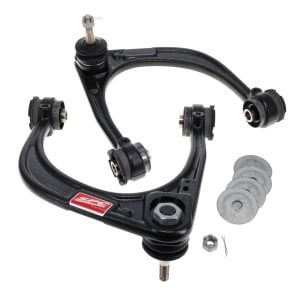
When you lift your truck or SUV, it’s inevitable that you’ll run out of factory alignment adjustment range to properly accommodate higher ride height and larger wheels and tires. Luckily, Specialty Products Company has the solution to this common suspension problem. SPC is an iconic manufacturer of adjustable front upper control arms for a wide array of trucks, cars, & SUV’s, including Toyota, Ford, Cadillac, Chevy, GMC, Nissan, Suzuki & more.

After you’ve installed a lift kit and suddenly realize your camber/caster is out of wack, your tire is rubbing against the rear of your fender, or your OE control arms are hitting the front spring buckets, be not afraid; all you need to do is pick up a pair of SPC Adjustable Front Control Arms! Featuring a greasable upgraded ball joint with isolated bushings, SPC’s control arms can correct alignment angles without compromising factory ride quality. Once you’ve made the proper adjustments with the help of SPC’s thorough documentation and instructional videos, your vehicle will have improved droop suspension travel, more optimal tire position, and more even tire wear. Built with a durable forged steel design, SPC upper control arms will give you all the strength and durability you need to conquer tough off road terrain. Replace your OE control arms with a pair of upgraded SPC arms and notice a massive difference in versatility, quality, and durability.

  • Get more droop travel: SPC’s arms give you more clearance around the spring bucket than stock arms. With 80° of articulation in the upgraded ball joint and free pivoting cross axis bushings, their upper control arms increase droop travel so you don’t have to worry about your control arms banging against the spring bucket when you encounter rugged terrain.
  • Get your drivability and tracking back: When you lift your truck, you throw off camber and caster, which can negatively affect alignment and tire wear. SPC’s arms have a minimum of +1° of caster built in. Using their patented sliding ball joint design, the arms are able to achieve at least ±2° of caster and ±2° of camber, so you can properly set alignment angles and fix uneven tire wear.
  • Get your tire where you want it in the wheel well: Adjustment of the upgraded SPC arms, along with the OE lower control arm, gives you enough range to move your oversized tires forward inside the wheel wheel, which minimizes rub and helps to avoid having to trim your fender.

Why buy Specialty Products Adjustable Upper Control Arm kits from TotalZParts.com?
We are an authorized and trusted dealer of all SPC suspension components, and we make it a priority to get SPC orders sent out in 1 business day or less. When you by SPC control arms, ball joints, or adjustment tools from us, you can be sure you’re getting brand new, factory fresh inventory that comes straight from SPC.


From November 1st through December 31st, 2019, all Bully Dog & SCT tuners are eligible for the manufacturer’s holiday rebate program. Limit 2 per household. Purchase your Bully Dog or SCT performance programmer from TotalZParts.com by December 31st, 2019 and submit your proof of purchase by January 10th, 2020 to receive your VISA gift card. See below for different rebate amounts on on the full line of Bully Dog & SCT products. Below are the links to the rebate submission forms.

Bully Dog Rebate Form
SCT Rebate Form

GTX (40460B, 40460S): $50
BDX (40470, 40490): $45
X4 (7015, 7416, 7215) = $40
GTX Watchdog (40465B): $40
GT Gas (40417): $40
GT Diesel (40420): $40
LiveWire TS+ (5015P, 5416P) = $40
iTSX (4015, 4416) = $40


Just in time for the holiday season, we are pleased to announce that all TotalZParts.com customers now have the option to sign in and pay with the information saved in their Amazon.com account. The checkout process is now faster and more convenient than ever.

Amazon Pay is a service that lets you use the payment methods already associated with your Amazon account to make payments for goods, services, and donations on third-party websites, in apps, and using Alexa. To make a payment, you can use any of the payment methods on file in your Amazon account.

Amazon Pay accepts credit and debit cards and transfers from your available Amazon Pay account balance. Credit cards currently accepted include Visa, Mastercard, Discover, American Express, Diners Club, and JCB.